The Mandatum Herald is a digital newsroom built to keep readers informed in one clean, fast and easy-to-use place. It brings together original reporting, a live market ticker, a full weather center and sports scores with league standings, all under the same design and without the clutter of a typical news portal.
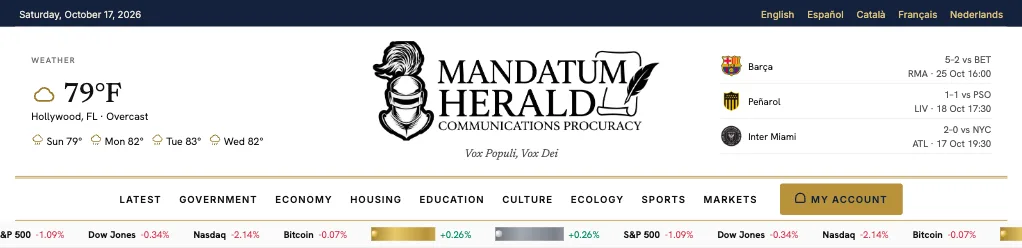
The header: local weather on the left, the masthead in the center, live scores on the right, and the main menu with the live ticker below.
What it is
The Mandatum Herald is the news platform of the Communications Procuracy, which is led by its Procuradora, MM Doña Bibiana Casartelli. It is published at news.emandatum.com. Its motto, Vox Populi, Vox Dei, appears under the masthead. It is also where the Order, ORDO SUPREMUS PRO CAUSIS HUMANITARIIS, publishes its news: appointments, official announcements and the many activities it carries out. The site is organized as a classic newspaper front page: a lead story in the center, supporting stories on each side, and a menu that takes you straight to each section.
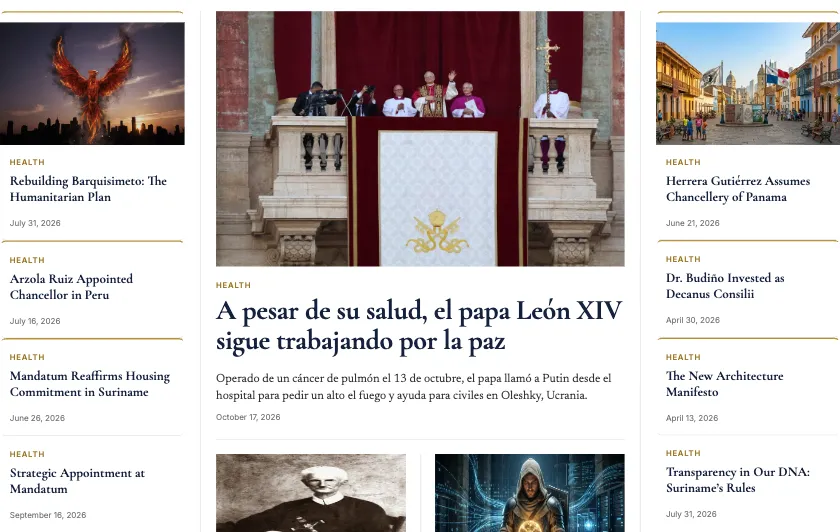
The front page: the lead story in the center, with the latest stories on each side.
What it is for
Following the Order. Mandatum news appears here first: appointments of officers and members, announcements from its leadership and governing bodies, and reports on the humanitarian activities and events the Order carries out.
Reading the news that matters. Stories are grouped by section: Government, Economy, Housing, Education, Culture and Ecology, plus Health, Opinion and Editorial pieces.
Following the markets at a glance. A ticker under the menu scrolls major indices, Bitcoin, gold and silver, with the daily change in green or red. A dedicated Markets page goes deeper.
Checking the weather before you leave the house. A weather block in the header shows the current temperature and the next few days, and one click opens a full weather center.
Keeping up with your teams. The header shows a quick scoreboard, and the Sports page covers scores, schedules and standings by league.
Reading in your own language. The bar at the very top lets you switch between English, Español, Català, Français and Nederlands.
How to use it
1. Browse by section
Use the main menu at the top: Latest, Government, Economy, Housing, Education, Culture, Ecology, Sports and Markets. On the front page, every story card lifts slightly when you hover over it, and the photo moves gently, so you always know what you are about to open. At the bottom of each article, a Keep Reading block suggests more stories.
2. Open the weather center
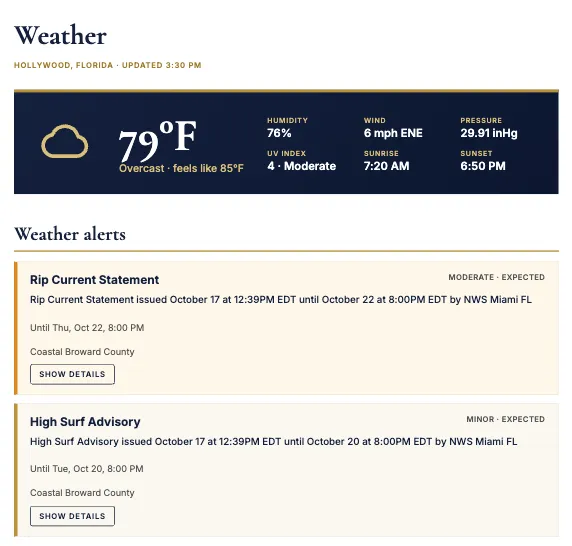
Click the weather block in the top-left corner of the header. The weather page brings together active alerts, an hourly outlook, a seven-day forecast and a short written briefing, together with links to official sources.
The weather center: current conditions, alerts and the forecast in one page.
3. Follow the scores and standings
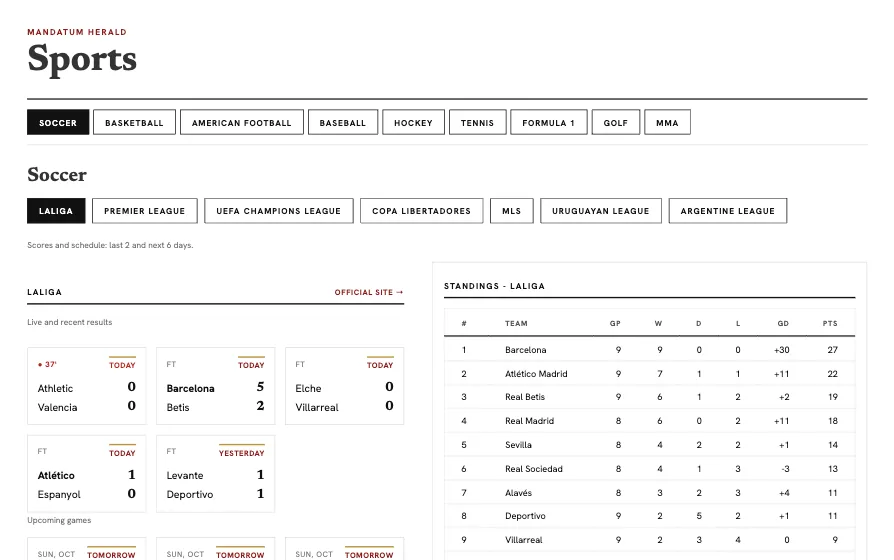
Open Sports from the menu. Choose a sport using the buttons at the top (Soccer, Basketball, American football, Baseball, Hockey, Tennis, Formula 1, Golf or MMA). Then pick a league with the second row of buttons and the page shows that league’s recent results, upcoming games and, where available, its standings table. Soccer includes LaLiga, the Premier League, the UEFA Champions League, the Copa Libertadores, MLS and more.
The Sports page: pick a sport, then a league, to see results, upcoming games and standings.
4. Create your free account
Select My Account in the menu. A window opens where you can sign in, or choose Register — it’s free to create a free membership. Once you are signed in, the same button becomes a small menu with My profile and Log out. After signing in you stay on the page you were reading. Some stories are reserved for members, and membership costs nothing.
5. Stay informed by email
Use the Subscribe — It’s free tab on the side of the screen, or the welcome window that appears after a short time on the site, to receive the Herald’s updates in your inbox. You can close that window at any time and keep reading.
6. Make it comfortable to read
The accessibility button on the left edge lets you enlarge the text, change the contrast or switch to a more readable font. The site is designed to work on phones, tablets and desktop screens.
In short
The Mandatum Herald puts the news, the markets, the weather and the scores in one calm, well-organized place. Explore the menu, create your free account, and let us know what you would like to see next.
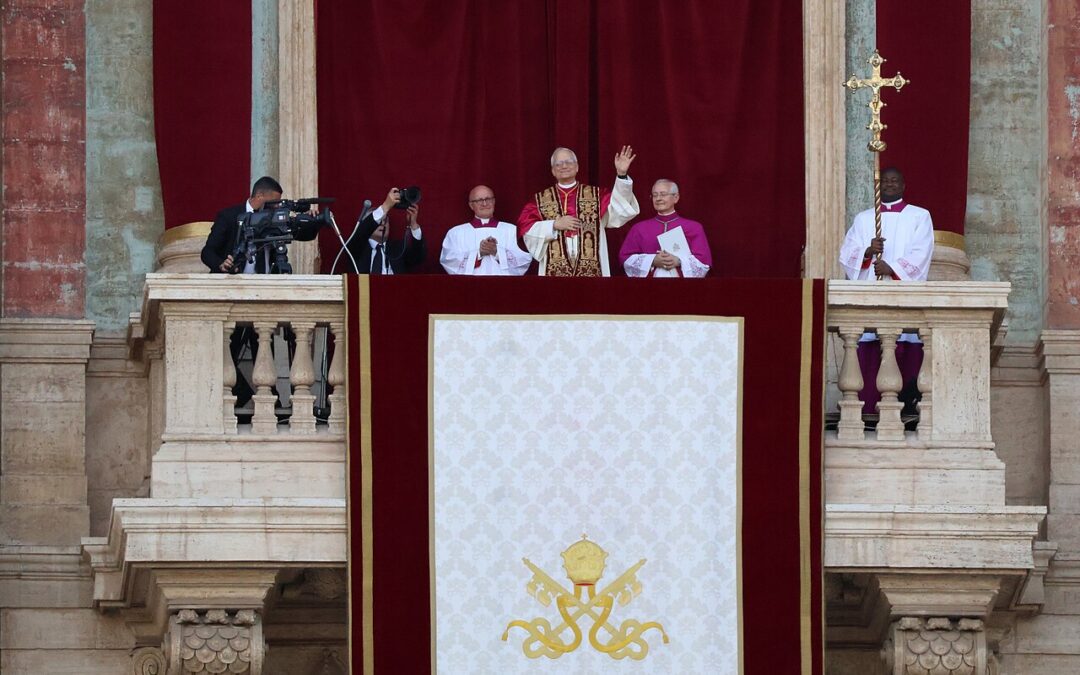
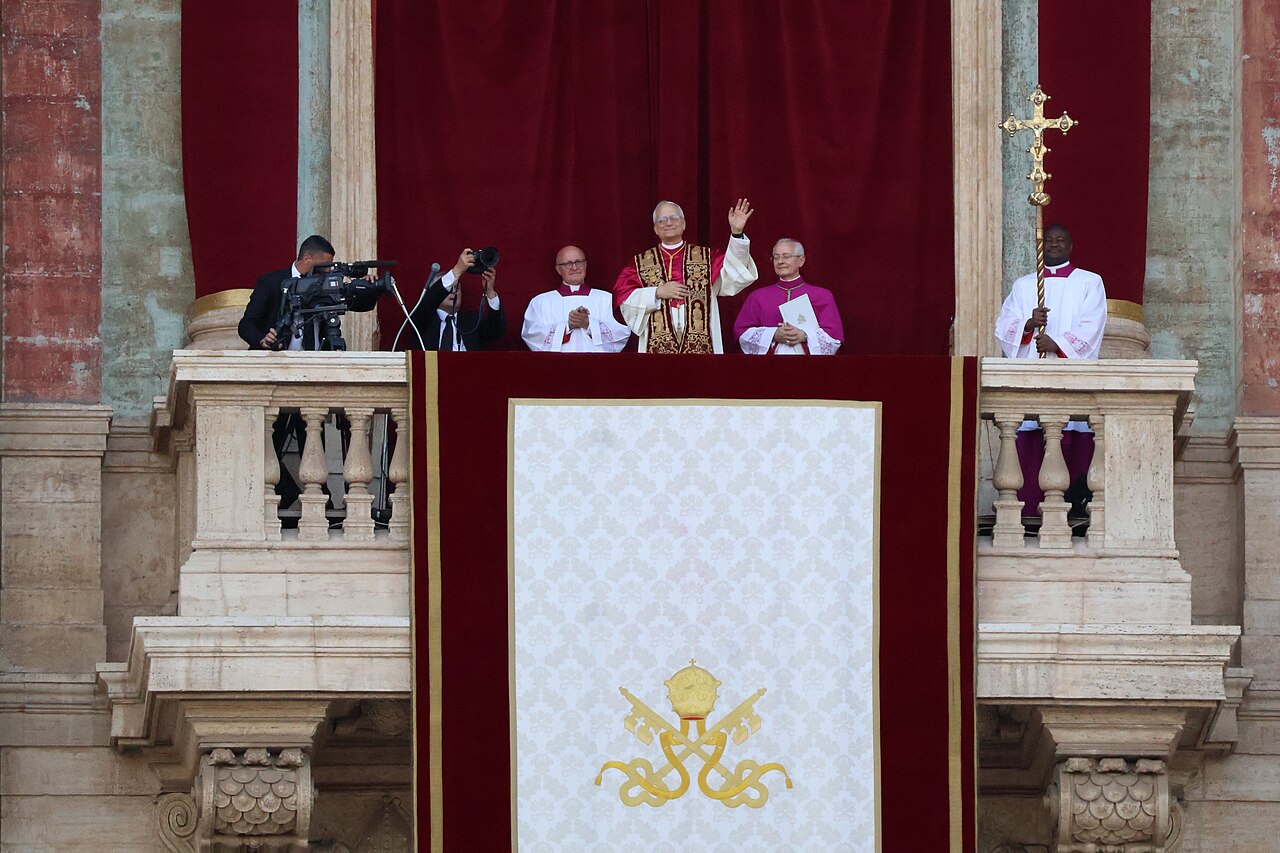
Pope Leo XIV on the loggia of St. Peter's Basilica (file photo). Photo: Edgar Beltrán / The Pillar, via Wikimedia Commons, license CC BY-SA 4.0.
Pope Leo XIV is recovering from lung surgery in Rome and has nonetheless not stopped working for peace: three days after the operation, from his hospital room, he phoned Russian President Vladimir Putin to ask for a ceasefire and help for civilians trapped in Ukraine. According to the Holy See Press Office, he was expected to leave Gemelli hospital on the afternoon of Saturday, October 17, on the fifth day of his stay, and return to the Vatican.
What Happened
On Sunday, October 11, the Vatican announced that the pope would have to undergo surgery for a nodular lesion in his lung. The operation took place on Tuesday the 13th at Gemelli. The surgeons, among them Dr. Stefano Margaritora, head of thoracic surgery at the hospital, removed the lower lobe of his right lung using a video-assisted technique. The surgery lasted about 90 minutes.
The examination performed during the operation confirmed a lung adenocarcinoma, as earlier studies had suggested, according to the Holy See. The Vatican described the surgery as successful and free of complications.
Recovery So Far
On Wednesday the 14th, blood tests and a chest X-ray showed a “normal postoperative course,” and the Vatican said recovery is progressing as expected. The pope began respiratory physiotherapy, walks around his room and is on a regular diet. This Saturday, doctors Luigi Carbone and Stefano Margaritora said the new tests and X-ray allowed them to discharge him. Before leaving, he was to celebrate Mass in a room on the hospital's 10th floor.
Despite His Health, Peace Remains on His Agenda
On Friday, October 16, just three days after the operation, the pope spoke by phone with Putin from Gemelli. The Holy See Press Office reported the call in a note to accredited media and did not specify who initiated it. It is the second known conversation between the two: the first was on June 4, 2025.
According to the Vatican, Leo expressed his “deep concern for the grave humanitarian situation” in Oleshky, a city in Ukraine's Kherson region, and asked for a ceasefire “to allow the delivery of food and medical assistance, and the voluntary and safe evacuation of the civilian population” (our translation). He also reaffirmed the Holy See's commitment to dialogue and peace.
The figures for trapped civilians vary by source. The New York Times, cited by America Magazine, reported on October 5 some 2,000 people, 40 of them children. The Ukrainian Council of Churches and Religious Organizations (UCCRO) estimates more than 6,000, including about 200 children. The Institute for the Study of War reported on October 2 that no food had reached the city since May 26. The call came after the UCCRO asked, on September 19, for the intervention of the pope and other religious leaders.
The Kremlin described the conversation as constructive and marked by mutual respect. It said Putin wished the pope a speedy recovery, thanked him for his willingness to help resolve the conflict, and supports the Vatican's initiative to bring supplies to the civilians of Oleshky, a city controlled by Russia, and that “it was agreed to cooperate” on the matter. Moscow blamed the humanitarian situation on Kyiv, which in turn accuses Russia of using hunger as an instrument of coercion. No details of what was agreed have been released and, according to the Salt Lake Tribune, Russia has not accepted a safe evacuation corridor.
That same day, in his message for World Food Day, the pope called regular access to food “a basic human right,” and Vatican Media released the first images of him since the surgery, celebrating Mass at Gemelli.
This is not an isolated gesture. Elected in May 2025, in his first Sunday message he called for peace in Ukraine, a ceasefire in Gaza and the release of the hostages. On April 12, 2026, at the Regina Caeli, he asked the parties to the conflicts to “cease fire and urgently seek a peaceful solution,” named Ukraine, Lebanon and Sudan, and asked that civilians be protected. On August 25, 2026, his Secretary for Relations with States, Archbishop Paul Gallagher, met in Moscow with Foreign Minister Sergey Lavrov and said that “the position of the Holy See is clear: the conflict cannot be resolved by military means” and that “this war must end.” Lavrov agreed to strengthen cooperation on humanitarian matters, and Gallagher mentioned the upcoming mission of Cardinal Matteo Zuppi to Russia.
The concrete results remain uncertain: as the Salt Lake Tribune recalls, his earlier humanitarian appeals have often had little effect. But Friday's call shows that, even while recovering from major surgery, the pope keeps peace and aid for civilians at the center of his work.
What Comes Next
This Sunday, October 18, he is scheduled to lead the Angelus from the window of the papal apartment. All audiences are suspended until October 20. The trip to South America scheduled for November 6 remains in doubt: Peru's president said plans could change and that recovery will take “several weeks,” and air travel is generally avoided for about three weeks after this type of surgery.
What Is Still Unknown
The Vatican has not published a prognosis or a follow-up treatment plan. Dr. David Jones of Memorial Sloan Kettering Cancer Center told CBS News that the pathology result is still to be known, including whether lymph nodes were involved and which molecular tests will guide any therapy. Cardinal Blase Cupich of Chicago said the diagnosis “is not the news we were hoping for.”
Information as of October 17, 2026, based on Holy See statements and the press cited below. It will be updated when new medical bulletins are issued.
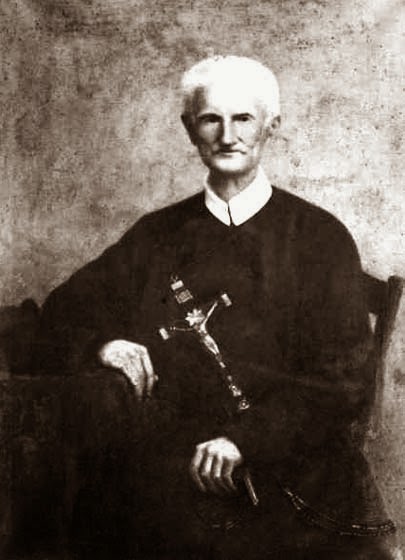
Peter Donders (1809–1887) was a Dutch priest who devoted his life to the enslaved, the Indigenous peoples and the lepers of Suriname, and whom John Paul II beatified on May 23, 1982.
He was not a martyr and did not suffer violent persecution. What he faced was the resistance of the colonists, the slowness of the authorities, and his own poverty and poor health, which is why his story is above all one of quiet perseverance.
A Poor Childhood and a Late Vocation
Peter Donders was born on October 27, 1809, in Tilburg, the Netherlands, the son of Arnold Denis Donders and Petronella van den Brekel. His family was poor: he could barely attend school and worked from childhood to help at home.
He had wanted to be a priest since he was a boy, but only at age 22, with the help of his parish clergy, was he able to enter the minor seminary. He was ordained a priest on June 5, 1841. While still studying theology, his superiors steered him toward the Dutch colony of Suriname.
Missionary Among the Enslaved
Donders arrived in Paramaribo on September 16, 1842. He spent his first years traveling by boat along the rivers of the colony's plantations, where he preached and administered the sacraments, mostly to enslaved people.
It is estimated that he came to minister to some 40,000 enslaved people spread across about 400 estates. In his letters he criticized the harsh treatment the African workers received. In a letter of 1846 he defended the enslaved and condemned the owners and administrators who profited from them; he wrote: “Woe, woe to Suriname on the great day of judgment!” Slavery was abolished in Suriname in 1863, when he had already been in the colony for more than twenty years.
Batavia: Three Decades with the Lepers
In 1856 he was sent to the leprosarium at Batavia, and there he worked for the rest of his life with few interruptions. He gave the patients religious care and tended them himself, personally, until the authorities agreed to provide an adequate nursing service. He also pressed the colonial authorities to attend to the needs of the sick.
When the Redemptorists arrived in 1866 to take over the Suriname mission, Donders and another priest asked to join the congregation. They did their novitiate under the vicar apostolic Johan Baptist Swinkels and professed their vows on June 24, 1867. He then returned to Batavia.
As a Redemptorist he also devoted himself to the Indigenous peoples, a mission that had been abandoned for lack of priests. He learned their languages and taught them the faith until his health forced him to leave that work in the hands of others.
Opposition and Hardship: What He Did Face
The historical records speak of no formal persecution, imprisonment or martyrdom. What they describe are real obstacles:
The colonists. He often met resistance from “Christian” colonizers who barred him from the plantations, even to administer the sacraments.
The authorities. He had to press the colonial government to attend to the lepers, and its response was slow: for years he was the one who cared for them personally.
The Indigenous peoples. He worked with the Arawaks, Warraus and Guaranis, battered by alcohol and by diseases such as smallpox brought by the Europeans, and had difficulties with the Caribs.
Poverty and health. He grew up without resources, began his studies late, and his health kept worsening until it forced him to give up some of his work.
Death, Beatification and Legacy
In 1883 the vicar apostolic transferred him to Paramaribo and then to Coronie to ease his burden; in November 1885 he returned to Batavia and resumed his work. Illness left him bedridden in December 1886, and he died on January 14, 1887, surrounded by the sick whom he had served.
His reputation for holiness spread beyond Suriname and Holland, and his cause reached Rome. Pope John Paul II beatified him on May 23, 1982. In Suriname he is remembered as the “apostle of the Indigenous peoples” and as the priest of the lepers.
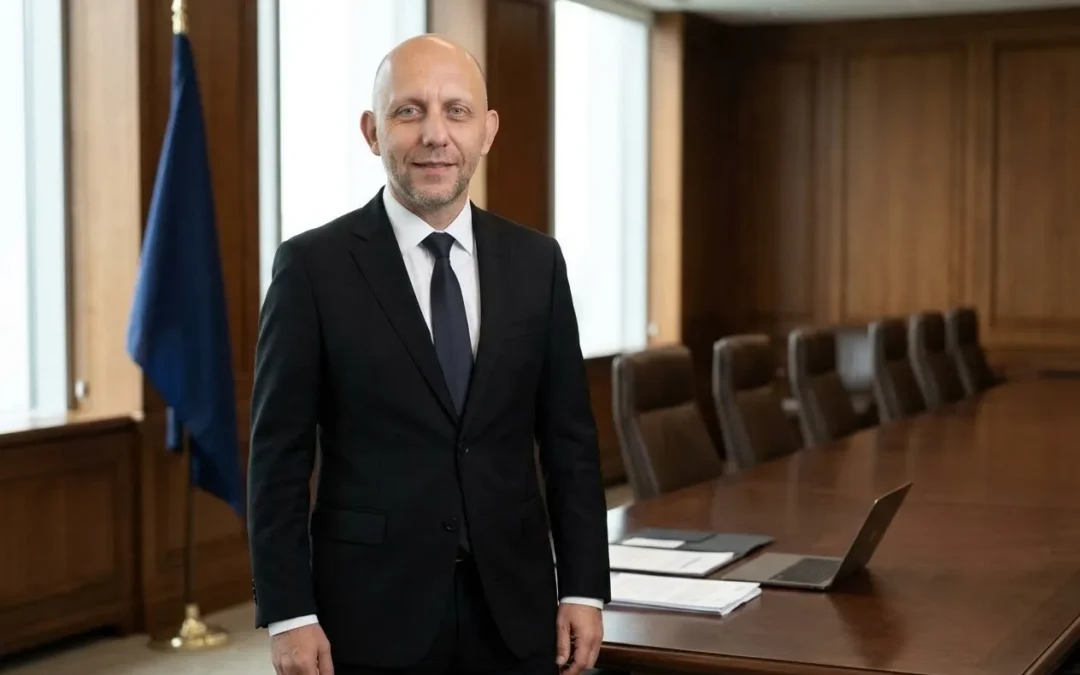
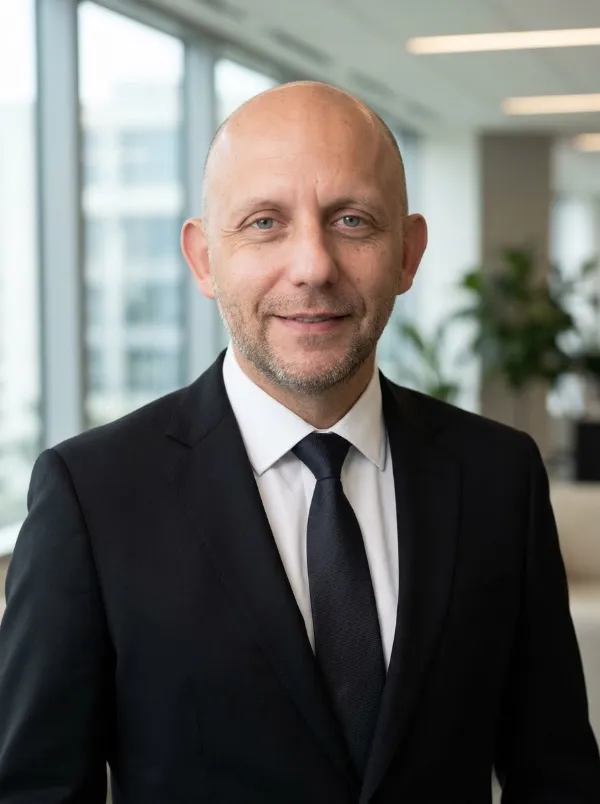
MM Don Ignacio Andrés Pulido Pachón serves as Deputy Grand Knight of Mandatum, Vice President of the Supreme Council and the Order's internal executive coordinator.
Mandatum, the ORDO SUPREMUS PRO CAUSIS HUMANITARIIS, recognizes MM Don Ignacio Andrés Pulido Pachón as its Deputy Grand Knight (Magnus Eques Adiunctus). He is one of the three members of the Supreme Council, the sovereign governing body of the Order, together with the Grand Knight and the Custos Secretorum. The three members of the Council govern as equals and take their decisions unanimously.
MM Don Ignacio Andrés Pulido Pachón, Deputy Grand Knight of Mandatum
His role in the Supreme Council
As Vice President of the Supreme Council, the Deputy Grand Knight assists the Grand Knight in the government of the Order and replaces him in case of absence or incapacity. His presence guarantees the continuity of the Order's leadership at every moment.
He also serves as the internal executive coordinator of Mandatum: he oversees the implementation of the decisions of the Supreme Council, the operational logistics and the administrative efficiency of the Order. Traditionally, he also supervises the Treasury, ensuring a transparent and strategic management of the Order's resources.
An engineer at the heart of the Order
MM Don Ignacio Andrés Pulido Pachón is a systems engineer. His training gives him a structured, methodical way of thinking and a deep understanding of how processes, information and technology work together, skills that are essential for coordinating the daily operation of an international order.
In a time when humanitarian work increasingly depends on reliable information systems, secure records and efficient coordination between countries, his engineering background is a key asset. It helps ensure that the decisions of the Supreme Council are carried out with precision and that every resource is managed with clarity and accountability.
Two languages, one mission
He speaks Spanish and English, which allows him to work directly with the members, Chancellors and partners of the Order in both languages and to keep its internal coordination clear and consistent across countries.
An honor for the Order
For Mandatum, it is an honor to count on MM Don Ignacio Andrés Pulido Pachón as Deputy Grand Knight. With his rigor, his commitment and his dedication to service, the internal life and the resources of the Order are in good hands.
On Peru's northern coast, between the districts of Reque and Eten in the Lambayeque region, Mandatum has drawn up a preliminary proposal for something larger than a housing development: a complete city. Its name is Ciudad Lumen.
The plan covers 1,120 hectares and 10,000 homes for a population of 45,000 to 50,000 people. But the homes are only the starting point. Around them the proposal places the things that make a city sustain itself: jobs, schools, health care, commerce and civic life.
Work first. Two economic engines sit at the heart of the design. A 250-hectare Technology Hub would offer qualified, formal employment in software, business services, agritech and the digital economy, the kind of work that today pushes talented young people from Lambayeque to leave for Lima or abroad. A 500-hectare Industrial Hub and Free Trade Zone, focused on agroindustry, light manufacturing and logistics tied to the Port of Eten, would create stable jobs for the broader workforce.
Dignity, not charity. Ciudad Lumen is not conceived as welfare housing. The idea is that a steady job, training and quality services allow each family to pay for its own home and move forward from there, rather than depend on a permanent subsidy.
A city built for its region. The proposal also includes a downtown commercial district, a civic center with an office for the Peruvian State, community health and education services, and a national disaster-response hub. The hub is a deliberate choice: Lambayeque is exposed to both earthquakes and the floods of El Niño, and the buildings are designed to withstand a magnitude 9.0 earthquake.
At this stage Ciudad Lumen is a working proposal, not a commitment. The next step is to present it to the Government of Peru and see whether there is interest in moving it forward. For a region where informal work and informal housing are still the norm, the question it raises is a simple one: what happens when a city is designed from the start around dignified work?
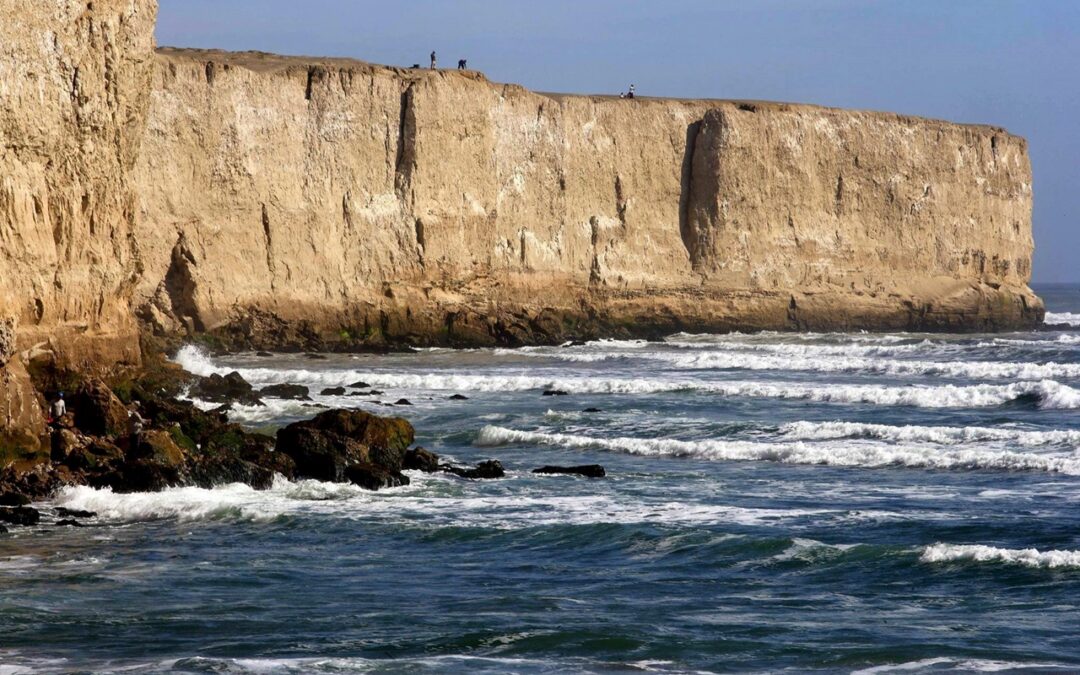
Photo: Cliffs near Puerto Eten, Lambayeque. MI PERÚ, public domain, via Wikimedia Commons.
This project has a detailed technical document covering the investment costs, the break-even point, maintenance and operating costs, financing, and ownership structure. The document is available to the members of the Order. Interested members may contact the Chancellery of the Order in their country to request the information.

 Barça
 Peñarol
 Inter Miami