
 Barça
 Peñarol
 Inter Miami
On Peru's northern coast, between the districts of Reque and Eten in the Lambayeque region, Mandatum has drawn up a preliminary proposal for something larger than a housing development: a complete city. Its name is Ciudad Lumen.
The plan covers 1,120 hectares and 10,000 homes for a population of 45,000 to 50,000 people. But the homes are only the starting point. Around them the proposal places the things that make a city sustain itself: jobs, schools, health care, commerce and civic life.
Work first. Two economic engines sit at the heart of the design. A 250-hectare Technology Hub would offer qualified, formal employment in software, business services, agritech and the digital economy, the kind of work that today pushes talented young people from Lambayeque to leave for Lima or abroad. A 500-hectare Industrial Hub and Free Trade Zone, focused on agroindustry, light manufacturing and logistics tied to the Port of Eten, would create stable jobs for the broader workforce.
Dignity, not charity. Ciudad Lumen is not conceived as welfare housing. The idea is that a steady job, training and quality services allow each family to pay for its own home and move forward from there, rather than depend on a permanent subsidy.
A city built for its region. The proposal also includes a downtown commercial district, a civic center with an office for the Peruvian State, community health and education services, and a national disaster-response hub. The hub is a deliberate choice: Lambayeque is exposed to both earthquakes and the floods of El Niño, and the buildings are designed to withstand a magnitude 9.0 earthquake.
At this stage Ciudad Lumen is a working proposal, not a commitment. The next step is to present it to the Government of Peru and see whether there is interest in moving it forward. For a region where informal work and informal housing are still the norm, the question it raises is a simple one: what happens when a city is designed from the start around dignified work?
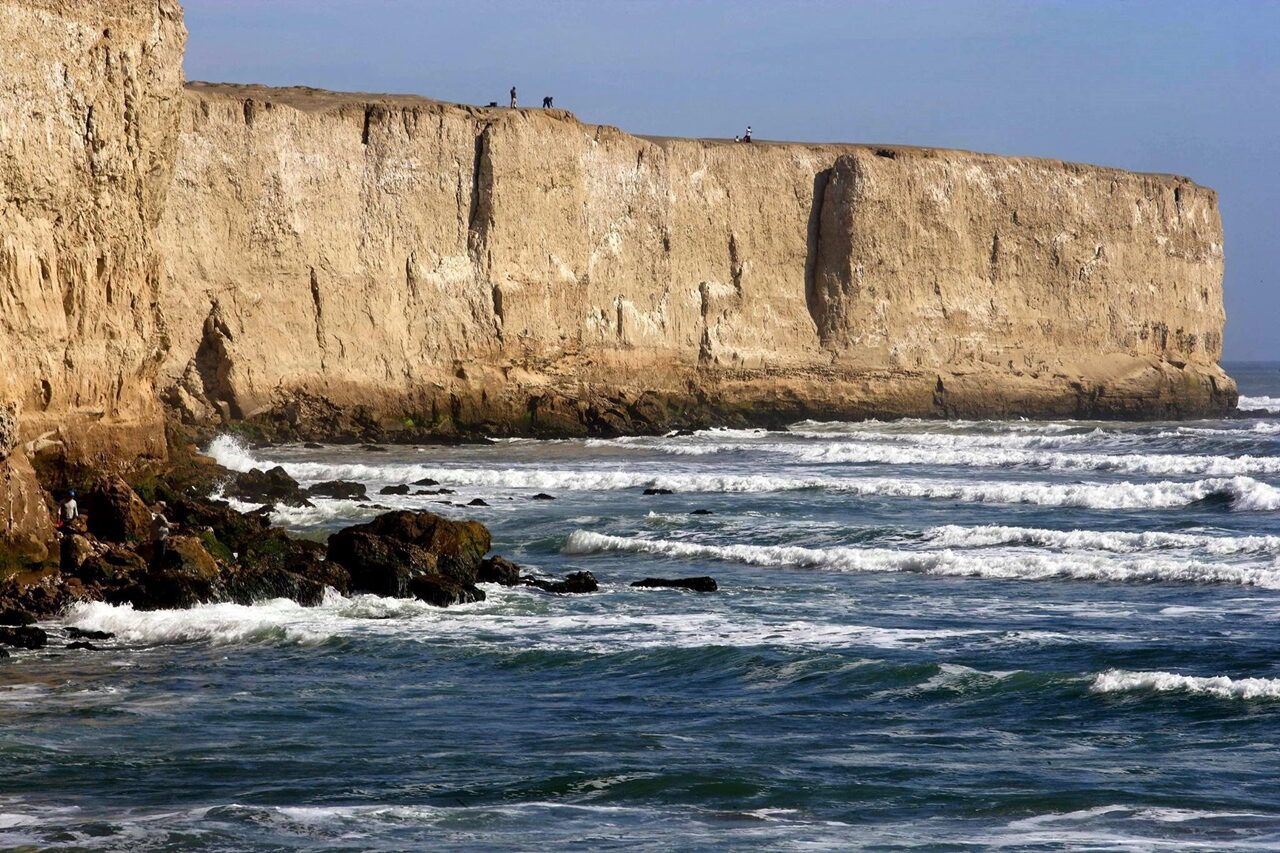
Photo: Cliffs near Puerto Eten, Lambayeque. MI PERÚ, public domain, via Wikimedia Commons.
This project has a detailed technical document covering the investment costs, the break-even point, maintenance and operating costs, financing, and ownership structure. The document is available to the members of the Order. Interested members may contact the Chancellery of the Order in their country to request the information.