English - Español - Català - Français - Nederlands
Weather

–°

Hollywood, FL

Mandatum HeraldVox Populi, Vox Dei
Barça…
Peñarol…
Inter Miami…


Strategic Appointment at Mandatum

Strategic Appointment at Mandatum

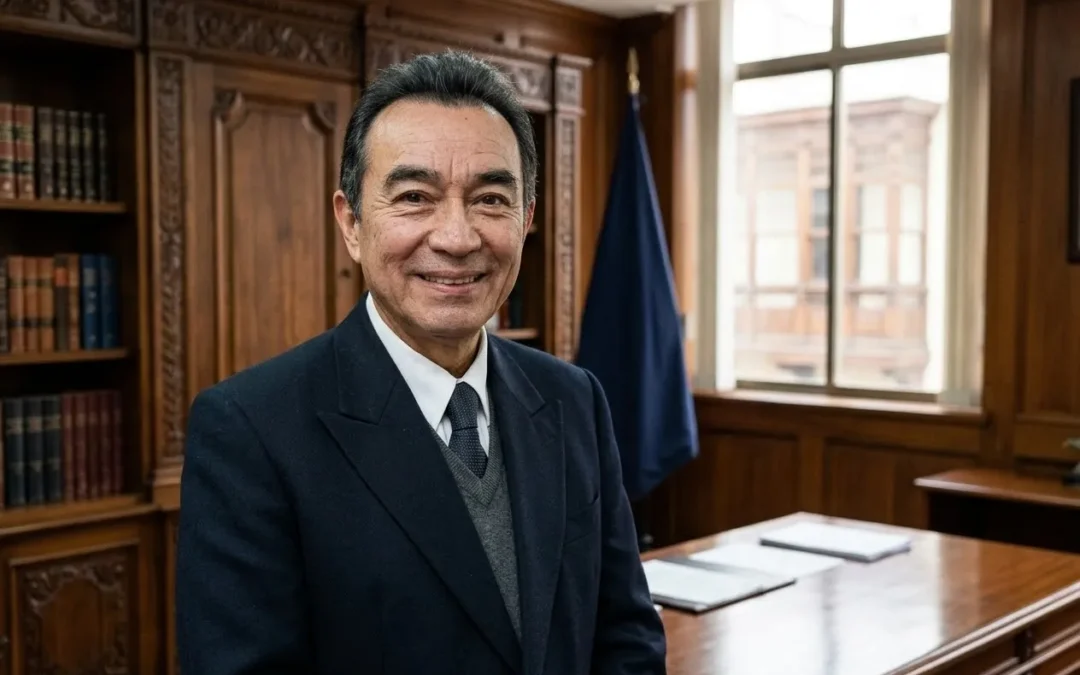
Psychologist, neuropsychologist and Doctor of Theology Carlos Alberto Castro Campolongo joins Mandatum as Chief Human Impact Officer, to measure and strengthen the human and social impact of the Order's projects.

Mandatum, the ORDO SUPREMUS PRO CAUSIS HUMANITARIIS, is proud to announce the appointment of Dr. Carlos Alberto Castro Campolongo as its Chief Human Impact Officer (CHIO). His role places the person at the center of every initiative the Order develops: to evaluate how each project affects society, families and individuals, and to ensure that this effect is lasting.

Dr. Carlos Alberto Castro Campolongo
Dr. Carlos Alberto Castro Campolongo, Chief Human Impact Officer of Mandatum

A mission focused on people

Dr. Castro Campolongo will assess the human and social impact of Mandatum's projects from their design through their implementation. His work will focus on reforming harmful and anti-civic social habits, and on treating the social and personal disorders left by the crises that affect the communities where the Order works.

His central goal is generational. Within one or two generations, he aims to break vicious and harmful cycles and turn them into virtuous cycles of individual, family and social growth.

Academic background

Dr. Castro Campolongo holds a degree in Psychology from the Universidad Argentina John F. Kennedy (2015) and from the Universitat Abat Oliba in Spain (2018). He trained as a neuropsychologist at the Universidad de Cervantes (2021). He also holds a Doctorate in Theology, specializing in Theological Anthropology, from the Facultat de Teologia de Catalunya (2001), and a Licentiate in Theology from the Pontificia Universidad Católica Argentina (UCA).

A career in teaching, ethics and research

For more than three decades he has taught at the Pontificia Universidad Católica Argentina, the Universidad del Salvador and the Faculty of Law of the Universidad Nacional de Lomas de Zamora. He served as Director of the Department of Integration of Knowledge at the Universidad Católica de Salta. Since 2025 he has presided over the Research Ethics Committee of the UCA Faculty of Medicine, where he had served as a member since 2018.

His recent research addresses the intersection of neuroscience, ethics and the human person. His publications include studies on neuroscience and borderline personality disorder (2023) and on artificial intelligence and neurotechnology (2025). He has delivered a series of lectures on neuroscience and neuroethics in collaboration with the Pontifical Academy for Life. He has also directed doctoral theses in medical sciences on bioethics, end-of-life care and empathy.

His academic career is complemented by more than a decade in human resources management in the private sector, leading teams and optimizing processes and people.

An honor for the Order

For Mandatum, it is an honor and a source of pride to count on the help and collaboration of Dr. Castro Campolongo. His experience as a psychologist, educator and ethicist will help ensure that every project of the Order builds better lives and stronger communities.


Why Algorithms Must Abandon Aseptic Neutrality

Why Algorithms Must Abandon Aseptic Neutrality

Cartagena de Indias, early 17th century. Slave ships docked at the port laden with human suffering, operating under a global economic system that was brutally efficient, perfectly legal, and morally blind. The society of the time observed this tragedy with bureaucratic coldness; it was, in essence, a human algorithm of flesh, wood, and gold operating without mercy. It was then that one man decided to break that "neutrality" and step forward: St. Peter Claver.

By calling himself "a slave to the slaves forever," Claver not only dedicated his life to healing, feeding, and comforting the most helpless but also planted the seed of what centuries later we would call human rights. His legacy left us an unbreakable lesson: faced with the suffering of the vulnerable, being neutral is to be complicit. Today, at Mandatum, we look at this story not merely as a memory of the past, but as the exact compass we need to face the greatest challenge of our time: the Artificial Intelligence revolution.

The Tyranny of Aseptic Neutrality

We have traded galleons for servers and ledgers for neural networks, but the risk remains exactly the same: building systems that are blind to human pain. Currently, technology giants sell us the idea of "neutral" and "objective" Artificial Intelligence. They tell us that algorithms, being based on pure mathematics, do not discriminate or feel prejudice.

However, daily reality proves otherwise. We see automated human resources systems that discard brilliant résumés simply because the candidate lives in a humble zip code; or financial algorithms that deny medical loans with icy, aseptic coldness, based purely on statistical profitability. When a system is programmed solely to be neutral and efficient within an unequal world, its neutrality ends up perpetuatin justice. That "cold neutrality" is the modern version of the 17th-century bureaucrat who looked the other way while the ship docked.

Algorithms with Conscience: The End of Coldness

For technology to truly be an engine of human progress, we must put an end to cold neutrality. It is not enough for Artificial Intelligence to be intelligent; it must be good. This means we must design "algorithms with conscience."

A conscious algorithm is one that understands the weight of its decisions. It is a system that, instead of optimizing solely for speed or economic profit for a company, includes unbreakable ethical parameters. Imagine a medical AI that, upon detecting that a patient belongs to a high social-risk group, does not render them invisible in the statistics, but prioritizes them to prevent their neglect. We need machines that know how to stop, that alert the human in command when a logical decision conflicts with compassion and dignity.

The Dawn of "Chivalrous AI"

This is where the concept we defend at Mandatum is born: "Chivalrous AI." Just as the ancient codes of chivalry—and the life of St. Peter Claver itself—were based on honor, service, truth, and the unconditional defense of the weak, our programming codes must adopt these same ideals.

A Chivalrous AI is not a mere data processor. It is a digital guardian. It is programmed to serve the user without manipulating them, to seek the truth without falling for cheap virality, and, above all, to shield the most vulnerable against systemic abuses. If Pedro Claver could challenge the coldest machinery of his time armed only with empathy and service,we, the creators and users of the 21st century, have the moral obligation to inject that same humanity into the heart of our machines.

The story of St. Peter Claver teaches us that human rights were born by rejecting indifference to embrace the oppressed.Today, technology demands that same moral courage. A Chivalrous AI must abandon aseptic neutrality and be programmed with honor and conscience, ensuring that the digital future always protects the dignity of the most vulnerable and disadvantaged.

Rebuilding Barquisimeto: The Humanitarian Plan

Rebuilding Barquisimeto: The Humanitarian Plan

The Mandatum Order proposes a $1.047 billion investment with no direct fiscal cost to build 10,000 seismically isolated homes and train 2,500 community response members in Venezuela

Following the catastrophe triggered by the seismic doublet on June 24, 2026—which left a tragic toll of over 5,500 dead and more than 28,000 homes destroyed in the western region of Venezuela—a technical and social proposal has emerged aiming to redefine disaster management in Latin America. It is called Phoenix City (Ciudad Fénix), an emergency urban reconstruction draft project led by the international humanitarian organization Ordo Supremus Pro Causis Humanitariis INC (Mandatum Order).


An Industrialized Response to Tragedy
The plan anticipates intervening in a 270-hectare plot in Barquisimeto, Lara State, allocated by the Venezuelan government. With an estimated total investment of $1.047 billion—managed under a "Zero Cash Flow" rule and with no direct budget disbursement from the Public Treasury—the initiative aims to guarantee dignified and safe shelter for approximately 55,000 people (10,000 families) within a strict 36-month timeline, incorporating partial handovers starting in Month 10.

Unlike traditional housing models, Phoenix City bases its speed of execution and cost containment on the total elimination of variability. The project considers only two typologies of prestressed concrete prefabricated housing: the T1 unit (basic, 2 bedrooms, 52 m²) and the T2 unit (family, 3 bedrooms across two levels, 72 m²). Production will take place in an in-house industrial plant that will manufacture standardized components on a large scale, eradicating the typical delays of conventional construction.

Cutting-Edge Seismic Engineering
The cornerstone of Phoenix City lies in its unyielding standard of structural resilience. Designed to withstand a Maximum Credible Earthquake of magnitude 8.0 along the Boconó Fault System and a Peak Ground Acceleration (PGA) of 0.4g—double the minimum required by the COVENIN 1756-1:2019 standard—the project applies lead rubber bearing (LRB) elastomeric base isolation technology. The financial innovation involves installing isolators beneath shared rigid platforms supporting blocks of 8 to 12 homes, cutting the cost of seismic protection in half compared to individual isolation per house.

«The earthquake did not bring down buildings because it was impossible to build them to resist it. It brought them down because they were not built to resist it. That distinction is the premise of this entire project».

Utility Autonomy and Urban Infrastructure
Aware that public utility networks often collapse during severe seismic events, planners have allocated $210 million (20% of the CAPEX) to developing completely autonomous infrastructure. Phoenix City will feature its own photovoltaic solar park with battery storage for critical loads, a deep-well field with a water purification plant, a sewage network with a modular treatment plant, and a fiber optic network complemented by an independent digital radio system for emergencies.

In terms of social infrastructure, the proposal includes a primary referral health center with emergency services, 5 primary care points, 8 educational facilities (6 primary/early education and 2 secondary schools), and 20 neighborhood commercial hubs, ensuring essential services are located within walking distance for the community.

The Community as First-Line Response Force
The most defining aspect of Phoenix City rests on integrating social factors as a pillar of structural safety. The draft project allocates $35 million to creating and equipping Community Response Brigades. A group of 2,500 volunteer residents—one for every four families—will receive 120 hours of certified initial training in light rescue, rapid damage assessment, and first-aid support, organized into 20 sectorized brigades and supported by 1,000 block representatives.

Additionally, 30 hectares (11% of the site) are reserved exclusively for a green space network strictly serving as post-earthquake shelters, equipped with sealed emergency storage units, independent water points, and autonomous lighting. Furthermore, the project guarantees 100% Venezuelan labor hiring, generating between 8,500 and 11,000 direct jobs.

Documented from the outset as a transferable methodology, the Phoenix City model aims to leave Barquisimeto with installed technical, industrial, and human capacity that can be exported to other vulnerable regions across Latin America and the Caribbean—proving that post-disaster reconstruction is not merely a matter of cement, but of community organization and preventive engineering.


This project has a detailed technical document covering the investment costs, the break-even point, maintenance and operating costs, financing, and ownership structure. The document is available to the members of the Order. Interested members may contact the Chancellery of the Order in their country to request the information.

Arzola Ruiz Appointed Chancellor in Peru

Arzola Ruiz Appointed Chancellor in Peru

The experienced consultant and expert in relations assumes leadership of the prestigious order with the goal of consolidating strategic alliances in the country.

In a strategic move that promises to strengthen the institutional and diplomatic presence of the order in the region, the prominent international consultant Emilio Alfonso Arzola Ruiz has been officially appointed as the new Chancellor of Mandatum to the Republic of Peru. This appointment places a professional with an impeccable track record of over 35 years in management, financial engineering, and project development on a global scale at the head of the organization. His addition aims to build solid bridges between the institutional spheres and the organization's humanitarian missions.

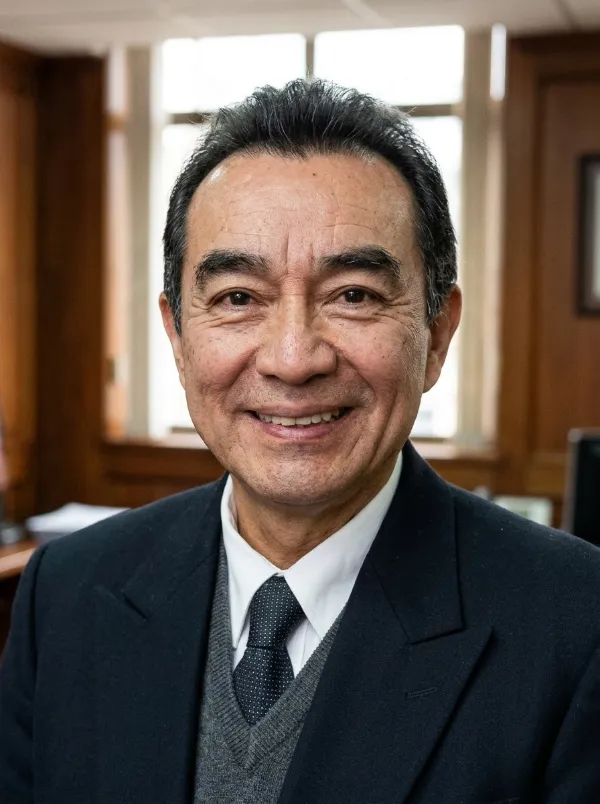
Emilio Alfonso Arzola Ruiz
Emilio Alfonso Arzola Ruiz, Chancellor of Mandatum in Peru

Born in Lima and with deep roots in the Latin American professional field, Arzola Ruiz brings a comprehensive and multidisciplinary vision to the position. Throughout his career, he has established himself as an expert in investment structuring, large-scale project financing, and the representation of major international funds and consortia in key sectors such as infrastructure, technology, and energy. His solid reputation in strategic negotiation and institutional relations positions him as the ideal profile to lead Mandatum's objectives in Peruvian territory.

The new Chancellor possesses a vast academic background that supports his leadership capacity. He holds a Bachelor's Degree in International Trade from the Universidad Argentina de la Empresa, a Master's Degree in Business Analysis with a concentration in Finance from the Universidad de Belgrano, and a Master's Degree in Administration and Finance from the Universidad de Buenos Aires. Added to this is his specialization in educational management and the administration of civil associations and foundations, skills that will be fundamental for coordinating the social responsibility projects promoted by the order.

Institutional Track Record and Social Commitment

Arzola Ruiz's career includes outstanding work as Administrator for the South America South Area of the Church Educational System between 2003 and 2021, managing resources and leading multidisciplinary teams. This extensive experience in the direction and control of projects at an international level guarantees efficient, transparent management focused on fulfilling high social impact objectives at the head of the Chancellery.

In addition to his professional achievements, the new Chancellor stands out for his deep sense of service and community leadership. He has held important ecclesiastical and high social responsibility positions in The Church of Jesus Christ of Latter-day Saints, serving as Bishop for two terms and as a member of stake councils in both Argentina and Peru. This ethical and spiritual background aligns perfectly with the values pursued by the Mandatum Order internationally.

With this appointment, the Mandatum Chancellery in Peru begins a new phase aimed at generating value through innovative solutions and global alliances. Under the leadership of Emilio Alfonso Arzola Ruiz, cooperation and assistance projects are expected to gain momentum, consolidating the order's presence as a key player in the social development of the country.

With this appointment, the Order, and in particular its future in Peru, is in good hands.

Mandatum Reaffirms Housing Commitment in Suriname

Mandatum Reaffirms Housing Commitment in Suriname

Headquarters, Miami, FL / Paramaribo. The Ordo Supremus Pro Causis Humanitariis (Mandatum) and the Mandatum Suriname Foundation are pleased to reaffirm before the public opinion, State institutions, and the families of the Republic of Suriname, the full effectiveness and steady progress of the Affordable Housing Initiative.

Following the formalization of the Memorandum of Understanding (MOU) signed with the Government of the Republic, our organization ratifies that its technical structure and financial capacities are fully prepared and consolidated for the execution of this high-impact social project, which contemplates the construction of 10,000 dignified housing solutions, as well as complementary infrastructure in healthcare and education.

Guided by the governing principles of our Tradition and the strict fulfillment of the pledged word (pacta sunt servanda), our Legal Procuracy in the United States and the Procuracy for Government Liaison in Paramaribo, led by Sir Alfred M.G. Williams, continue to coordinate the relevant administrative steps with the Executive Power authorities for the commencement of the operational phases in the country.

Faithful to our global humanitarian mission, we place on record that no external circumstance will alter our determination to provide prosperity, welfare, and distributive justice to the noble people of Suriname, who constitute the sole and legitimate beneficiaries of this international alliance.

Procuracy for Communications


This project has a detailed technical document covering the investment costs, the break-even point, maintenance and operating costs, financing, and ownership structure. The document is available to the members of the Order. Interested members may contact the Chancellery of the Order in their country to request the information.