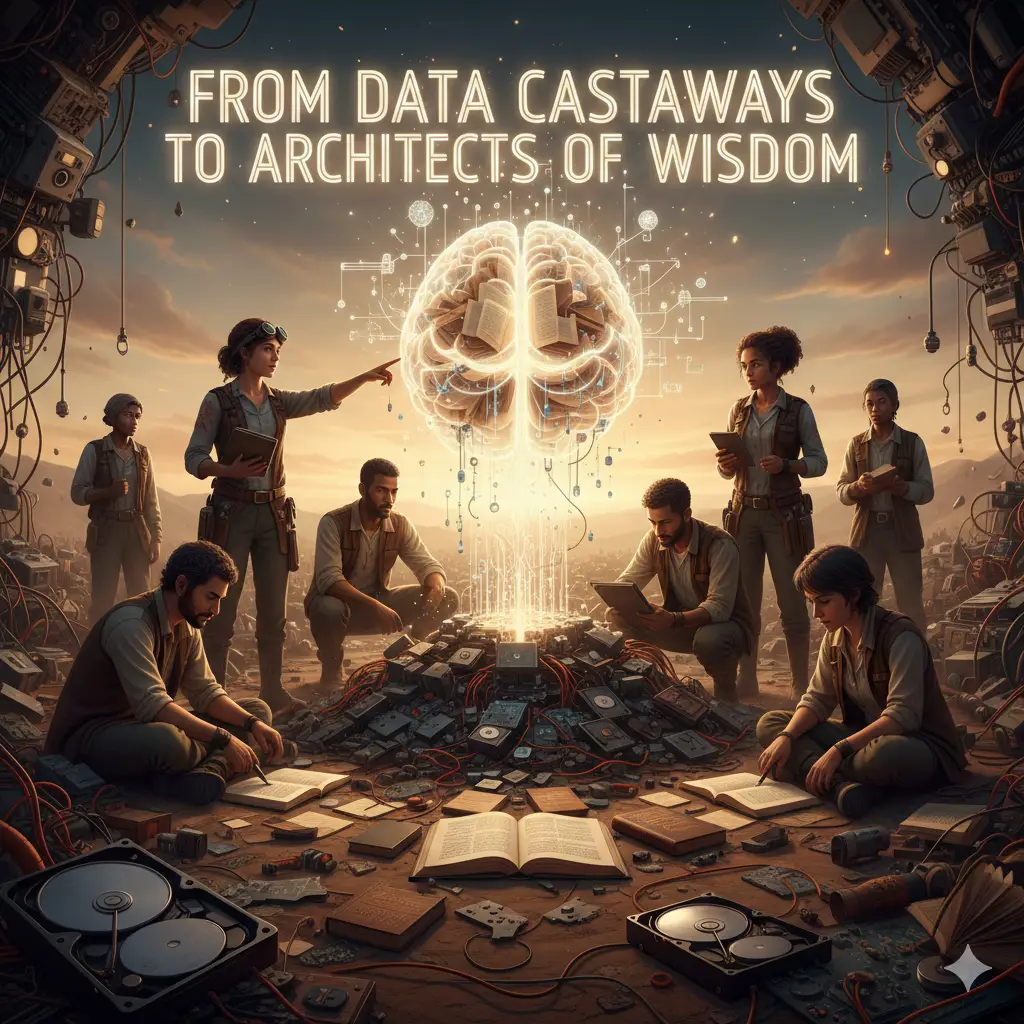
The Digital Co-Pilot: Beyond Automation
We are entering a new era where the boundary between human intuition and machine efficiency is creating a fascinating synergy for creators worldwide. For years, the narrative around Artificial Intelligence was focused on the fear of replacement, but the reality is proving to be a powerful partnership. AI is not acting as a substitute for the soul of the artist or the vision of the entrepreneur; instead, it serves as a digital co-pilot. This technology is designed to handle the repetitive and mundane tasks that often drain our mental energy daily. By delegating the “boring” work to algorithms, we are finally reclaiming the time needed to focus on deep, meaningful innovation.
The true power of this partnership lies in the liberation of the human intellect from the mechanical constraints of data processing and formatting. When a creator is no longer burdened by the technical minutiae of sorting through vast information sets, their capacity for high-level strategy expands significantly. AI acts as a sophisticated filter, surfacing the most relevant patterns and insights that would take a human brain weeks to identify. This allows for a more fluid creative process where the spark of an idea can be fanned into a flame almost instantaneously. We are not just working faster; we are thinking deeper and reaching for more ambitious goals than ever.
The End of the Blank Page Syndrome
One of the most significant hurdles for any professional, whether a writer, designer, or engineer, is the paralyzing fear of starting from zero. Generative AI tools are revolutionizing this process by acting as a sophisticated “brainstorming partner” that provides immediate, diverse perspectives on any given topic. By providing a base layer of ideas or technical drafts, these systems allow human creators to jump straight into the refinement and emotional polishing phase. This shift is drastically accelerating the pace of development in creative industries, allowing complex projects to move from concept to reality in record time. It is effectively the end of the blank page syndrome for everyone.
This collaborative approach transforms the creative journey from a lonely struggle into a dynamic dialogue between the user and the digital interface. Instead of waiting for a random moment of inspiration, professionals can now actively provoke it by exploring a multitude of AI-generated variations. This doesn’t diminish the creator’s role; rather, it elevates them to the position of a master curator and editor who defines the final vision. The ability to iterate at the speed of thought means that the cost of experimentation has dropped to nearly zero. Consequently, we are seeing a surge in “hybrid” works that blend diverse styles and disciplines in ways that were once impossible.
Personalized Learning: Democratizing Mastery
The integration of AI into educational platforms is perhaps the most noble application of this technology, as it allows for truly personalized growth. Every individual processes information differently, and AI can now adapt complex curriculum to match the specific learning pace and style of each student. This means that a person interested in quantum finance or cybersecurity can have a “private tutor” available twenty-four hours a day to explain difficult concepts. This democratization of high-level knowledge is breaking down traditional barriers to entry in technical fields. We are witnessing a global leveling of the playing field, where passion and curiosity are the only real limits to mastery.
Furthermore, these AI-driven educational systems can identify specific gaps in a student’s understanding that traditional classroom settings might overlook or ignore entirely. By providing instant feedback and alternative explanations, the technology ensures that no student is left behind due to a rigid or outdated teaching method. This creates a more inclusive environment where lifelong learning becomes a practical reality for people of all ages and professional backgrounds. The potential for social mobility increases as specialized skills become more accessible to those who were previously excluded by cost or location. We are building a future where the pursuit of excellence is no longer a luxury but a universal opportunity.
The Human Touch: The Premium of Authenticity
As the world becomes more saturated with digitally generated content, the value of the “human touch” and authentic storytelling is reaching a historic premium. AI can generate data-driven reports or functional code, but it cannot replicate the unique lived experiences and emotional depth of a human being. Professionals who learn to use these tools are finding that their specific taste and ethical judgment are more important now than ever before. The future belongs to those who can master the technical tools while maintaining a strong, identifiable human voice. In this new landscape, technology becomes the brush, but the human spirit remains the only true painter of our reality.
The nuance of human emotion, shaped by a lifetime of failures, successes, and cultural context, remains the most sought-after ingredient in any creative endeavor. While a machine can mimic a style, it cannot truly understand the “why” behind a piece of art or a groundbreaking business strategy. This gap is where human value resides today: in the ability to bridge the cold logic of data with the warmth of empathy. Authenticity is becoming the most valuable currency in a digital marketplace, as audiences crave connection and meaning over mere perfection. By leaning into our humanity, we ensure that our work resonates on a level that no algorithm can ever hope to reach.
Ethical Innovation: Building a Trustworthy Future
The transition into an AI-driven society requires a conscious commitment to ethics and transparency to ensure these tools benefit all of humanity equally. Leading developers and global organizations are now focusing on creating “explainable AI,” which allows users to understand the logic behind every automated decision made. This focus on transparency is crucial for building the public trust necessary for widespread adoption in sensitive areas like medicine or urban planning. By prioritizing human values in the code itself, we ensure that technology remains a servant to our collective progress. Innovation without ethics is a hollow pursuit; innovation with purpose is the key to a flourishing future.
Ultimately, the responsibility for how we use these powerful digital instruments lies with us as a global community of thinkers and creators. We must actively participate in the conversation about bias, privacy, and the long-term societal impacts of widespread automation in the workplace. By fostering a culture of “human-centric AI,” we can mitigate risks while maximizing the extraordinary benefits that this technology offers to our civilization. This is not just a technological shift; it is a moral one that invites us to define what kind of future we want to build. When we align our technical prowess with our highest virtues, we create a world where everyone has the power to thrive.