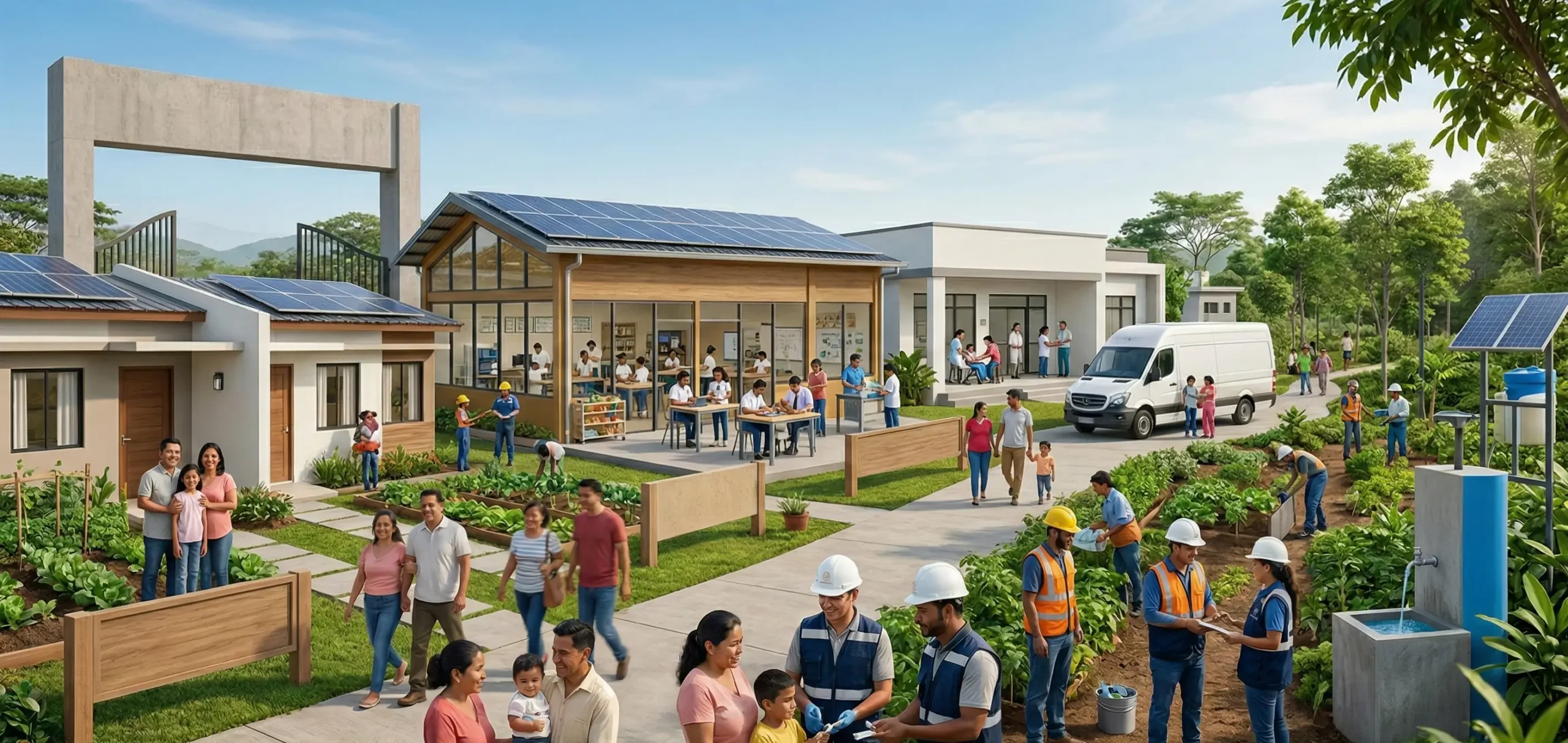
Why the SDGs Should Matter to You Personally
The Call of the Decade: The Structure and Scope of the SDGs
If you’ve ever felt overwhelmed by the scale of global problems, humanity’s solution is surprisingly structured: the Sustainable Development Goals (SDGs). They’re not a wish list but a global action plan adopted by all 193 UN member states in 2015. Their main difference from the previous Millennium Development Goals (MDGs) lies in their universal nature: they apply both to the fight against extreme poverty in developing countries and to the fight against waste and pollution in developed ones.
The SDGs consist of 17 key goals, but what truly gives them substance are their 169 specific targets, which detail exactly what must be achieved. For example, SDG 4 (Quality Education) doesn’t just say “improve education”—one of its targets (4.3) states: “By 2030, ensure equal access for all women and men to affordable and quality technical, vocational and tertiary education, including university.” This level of precision allows governments, companies, and citizens to measure progress. Understanding this structure—Goal (the what), Target (the how and how much)—is key to seeing the SDGs not as abstract ideals but as concrete tasks to be executed.
The Hidden Interconnection: The Domino Effect of Sustainability
The true genius of the SDGs lies in their interdependence and in the principle of the 5 Ps: People, Planet, Prosperity, Peace, and Partnerships. Imagine trying to achieve SDG 10 (Reduced Inequalities). If we only focus on financial transfers, we will fail. To reduce inequality, we must ensure universal health coverage (SDG 3) since chronic diseases are a major cause of poverty. We must also guarantee inclusive education (SDG 4) so that everyone has the same tools to succeed in the job market.
Moreover, if inequality persists, social instability will likely increase, directly affecting SDG 16 (Peace, Justice and Strong Institutions). This holistic vision is essential: we cannot achieve Prosperity (SDG 8: Decent Work and Economic Growth) without protecting the Planet (SDG 13: Climate Action). Pollution and biodiversity loss (SDG 14 and 15) threaten productivity, resources, and ultimately, the health and well-being of People. Every action you take that supports an SDG—no matter how small—creates a ripple that benefits several goals at once. It’s an intrinsically connected system.
From Theory to Action: The Citizen’s Manual for 2030
You may not be a head of state, but you are a consumer, a voter, an employee, a potential investor—and most importantly, a citizen. Your impact multiplies through everyday decisions. Here’s how you can align your life with the core pillars of the SDGs:
1. Smart Consumption and the Planet (SDG 12, 13, 14, 15)
SDG 12 (Responsible Consumption and Production) is where ordinary citizens have the most influence. It means leaving behind the culture of “use and throw away.”
-
In the kitchen: Apply the “3 Rs” (Reduce, Reuse, Recycle) to food waste. Use food inventory apps or plan menus. Consider buying “ugly” fruits that would otherwise be discarded. This supports SDG 12, and also SDG 2 (Zero Hunger) by reducing pressure on global food production.
-
In your closet: Embrace slow fashion. Ask yourself: Do I really need this? Choose durable garments, swap clothes, or buy secondhand. The textile industry is among the most polluting, so reducing new clothing consumption directly supports SDG 13 (Climate Action).
-
In transport: Promote cycling, public transit, or carpooling. If buying a car, consider hybrid or electric options. This directly improves urban air quality, supporting SDG 11 (Sustainable Cities and Communities).
2. Ethical Investment and Prosperity (SDG 8 and 9)
Your money, no matter how little, can be a powerful engine for positive change.
-
Responsible Banking: Check where your money sleeps. Does your bank invest in fossil fuels or in clean technology and socially responsible businesses? Consider switching to a credit union or a bank with clear sustainability policies. This drives SDG 9 (Industry, Innovation and Infrastructure) by supporting green technology investment.
-
Sustainable Entrepreneurship: If you own a business, integrate sustainability metrics into your model. Are you offering fair wages (SDG 8)? Are you promoting gender equality (SDG 5) in hiring? A business that benefits both society and the planet is the future of SDG 8 (Decent Work and Economic Growth).
3. Education, Equity, and Social Peace (SDG 4, 5, 16)
Personal growth is a direct contribution to societal quality.
-
Skills Volunteering: Use your professional expertise for social good—what’s known as pro bono work. Are you a designer? Help a local NGO with its visual materials. A lawyer? Offer free legal advice. This strengthens SDG 4 (Quality Education) and SDG 16 (Peace and Justice) by empowering civil society.
-
Promoting Equity: Be an active advocate for gender equality (SDG 5). This can be as simple as calling out a sexist remark or as strategic as urging your company to implement equal pay and work-life balance policies. The progress of women equals the progress of humanity.
The Final Secret: Partnerships (SDG 17)
The last goal, SDG 17 (Partnerships for the Goals), is ironically the most crucial. The SDGs cannot be achieved if each of us works alone. We must collaborate at both the micro and macro levels.
Look for local organizations already working toward a goal you’re passionate about—join them and amplify their message. Sign petitions, participate in public consultations, and demand that your political representatives be accountable for the nation’s SDG commitments.
The SDGs are neither a passing trend nor an unreachable utopia. They are humanity’s clearest declaration of the future we deserve. Now that you understand their interlinked structure and have a practical manual for action, only one question remains:
Which of these 17 goals will you start transforming today?